Scale is not understanding
Bigger models produce better text. They do not produce comprehension, context, or the capacity to be wrong in useful ways.
New · First Edition 2026 · NeuroShift Publishing
How the Brain Will Revolutionize AI
Artificial intelligence is everywhere. But what if the path to better AI begins not with bigger models — but with the brain?
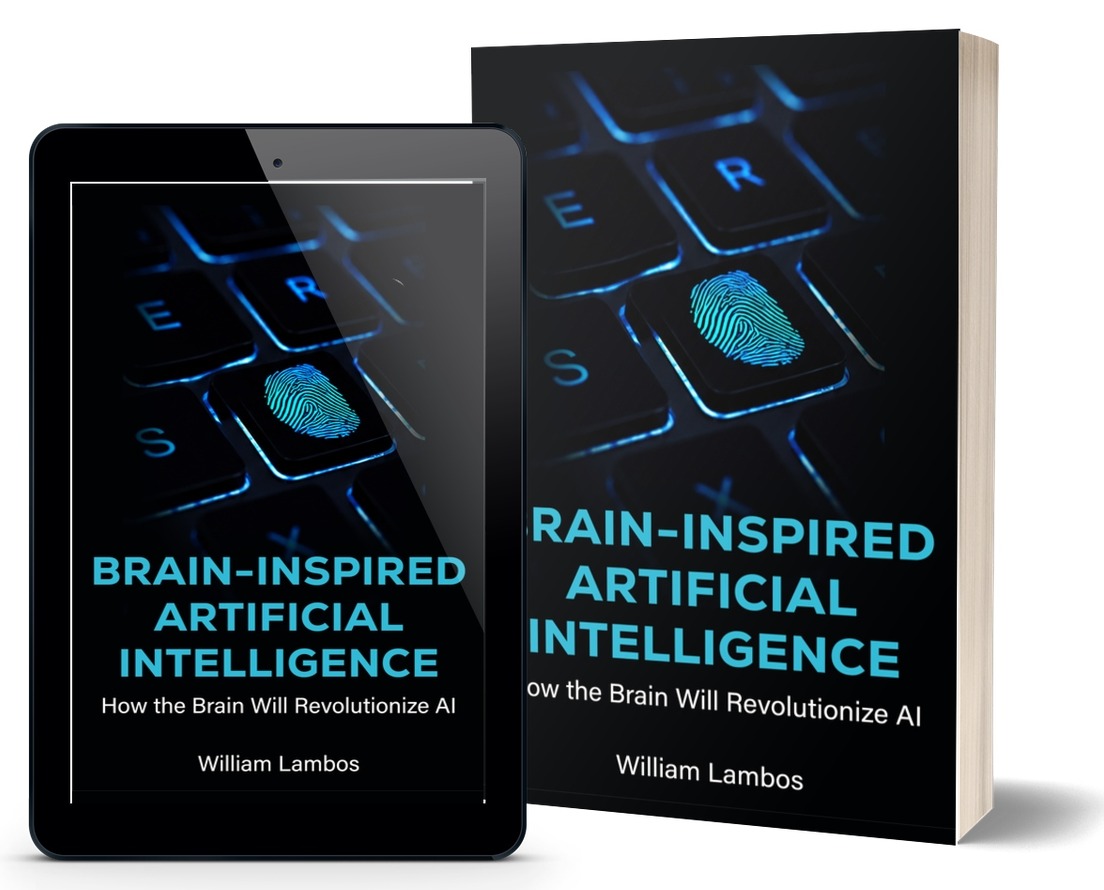
“Erudite, entertaining, full of bold ideas, and massively controversial.”
Elkhonon Goldberg, Ph.D. — author of The Executive Brain
The Argument
Today’s generative AI systems can produce impressive outputs, yet they still hallucinate, misunderstand context, fail at real-world pattern recognition, and operate without true agency, meaning, or understanding. In Brain-Inspired Artificial Intelligence, William A. Lambos, Ph.D., argues that these limitations are not minor engineering glitches. They reveal a deeper problem in how we think about intelligence itself.
Drawing on neuroscience, clinical neuropsychology, data science, and computational modeling, Dr. Lambos explores why human intelligence is fundamentally different from machine output, and why the future of AI may depend on learning from the biological systems that already solve the problems current models cannot.
Inside, readers will discover why generative AI is not human-like intelligence, how the brain creates agency and adaptation, and how brain-inspired approaches may point the way toward safer, more accurate, and more flexible AI systems.
Bigger models produce better text. They do not produce comprehension, context, or the capacity to be wrong in useful ways.
Biological intelligence is goal-directed, embodied, and driven by need. Agency is not a feature bolted on after training.
Hemispheric specialization, world models, attention, and continual learning are structural answers, not tuning parameters.
For Futurist Researchers & Technology Investors
If transformer scaling is approaching its ceiling, the decisive question is no longer how much compute — it is which architectures come next, and who is already building them. This book is written to be read as a map of that frontier.
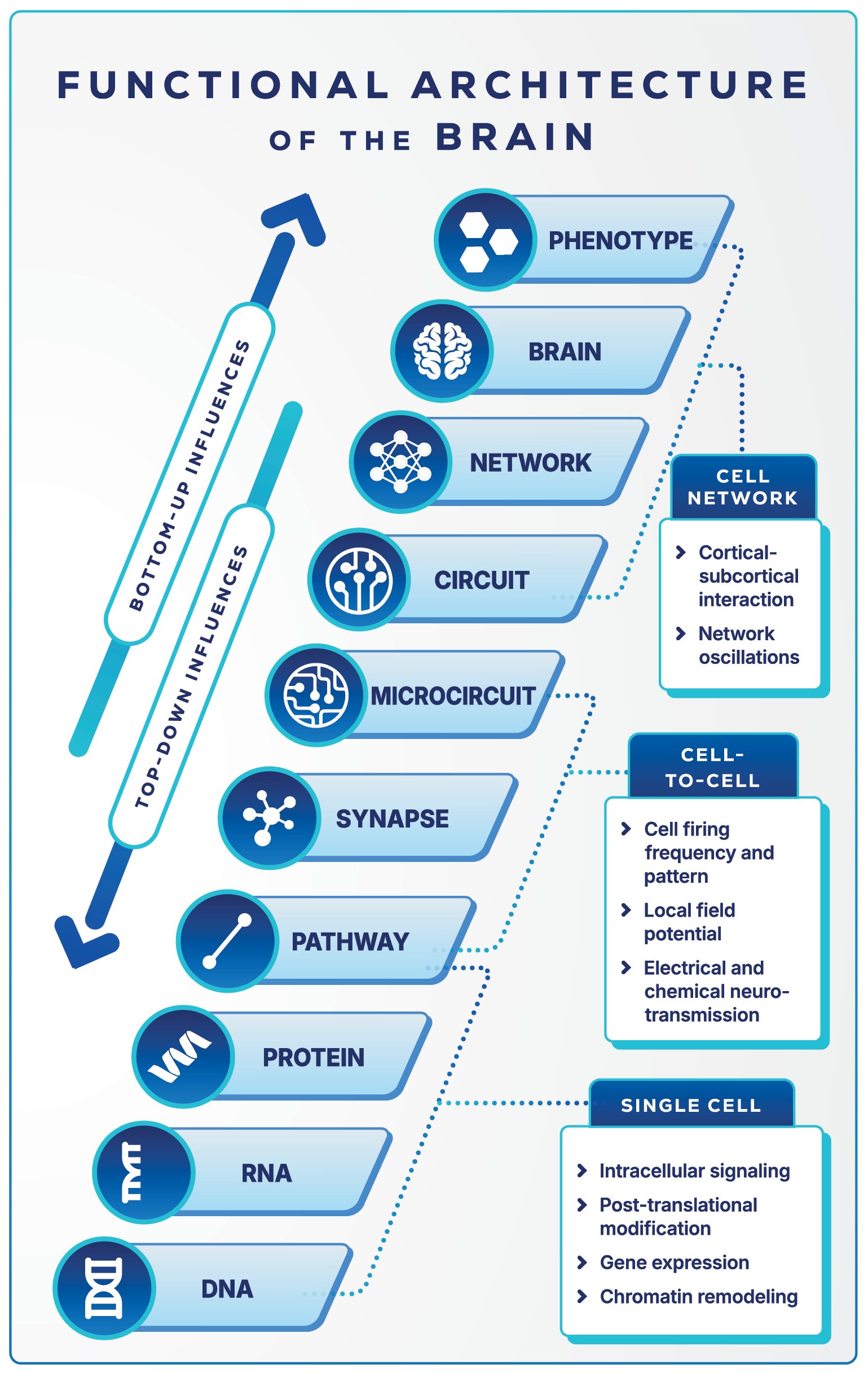
A clear-eyed account of what current architectures structurally cannot do — and why more parameters, more data, and more context windows do not resolve it.
Agency, embodiment, biological need, continual learning, hemispheric specialization, and predictive world models — treated as engineering signal, not metaphor.
A survey of brain-inspired and neuromorphic approaches moving from laboratory to commercial reality, and the design principles that separate the serious from the speculative.
A working framework for judging whether a system is genuinely brain-inspired or simply borrowing the vocabulary — useful for research, due diligence, and strategy.
“He makes a compelling case that, over time, biologically inspired design may matter more to the advancement of artificial intelligence than scale alone.”
Craig Tanio, M.D. — founder, Rezilir Health
Two Kinds of Intelligence
Human and artificial intelligence are routinely described as points on one scale. Table I.1 sets them side by side on the dimensions that actually differ — goals, salience, pattern recognition, emotion, recursion, theory of mind, and energy.
Read down either column and the asymmetry is hard to unsee: one system is goal-seeking, self-representing, and nearly free of heat loss; the other is statistical, non-intentional, and loses more than 70% of the energy it consumes.
View Table I.1 full size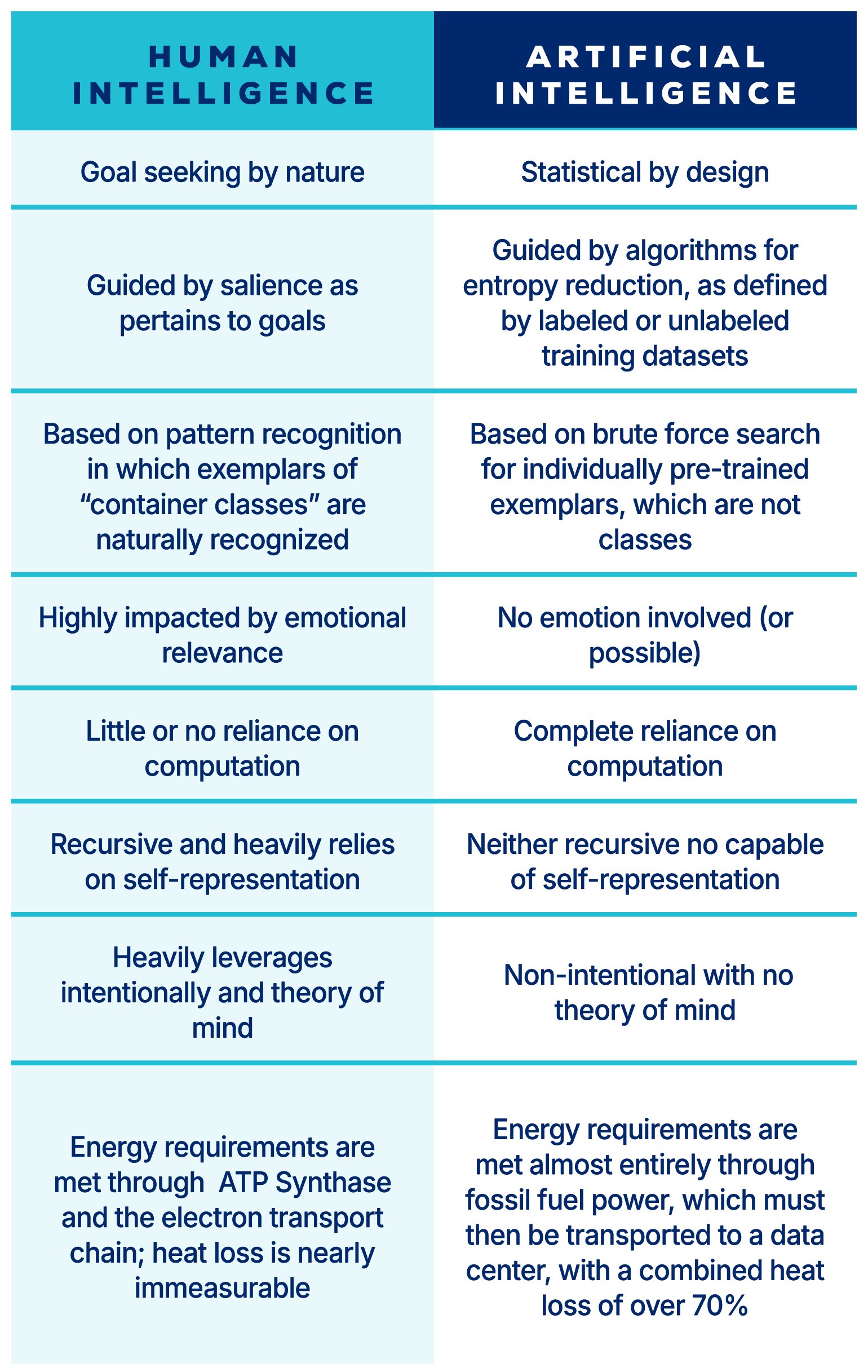
Praise
“William Lambos’s new book offers a unique perspective on why the next generation of AI must be informed by neuroscience to succeed. It has all the ingredients of a must-read: erudite, entertaining, full of bold ideas, and massively controversial. Anyone who wants to better understand where AI is, where it is going, and where it should go will enjoy it.”
Elkhonon Goldberg, Ph.D.Author of The Executive Brain and Creativity: The Human Brain in the Age of Machines
“William Lambos has written a lively and provocative tour of what neuroscience can teach AI. A valuable read for anyone interested in why today’s systems still fall short of biological intelligence — and how ideas like agency, hemispheric specialization, and continual learning might point the way forward.”
Max S. BennettAI entrepreneur and author of A Brief History of Intelligence
“Lambos offers a timely and provocative reframing of how we understand intelligence. His central insight — that agency lies at the core of true intelligence — challenges us to look beyond the mere production of technically accurate answers and toward the adaptive, goal-directed nature of living systems.”
Craig Tanio, M.D.Founder, Rezilir Health
“For anyone who feels fearful or uneasy about the rapid rise of AI, this book may offer a refreshing and grounding perspective. It helps separate what today’s AI can actually do from the human qualities and capabilities we often project onto it.”
Sonika CottmanSr. Director at Reputation, author of Formless
Who Should Read It

About the Author
William A. Lambos, Ph.D., is a licensed clinical neuropsychologist, neuroscientist, and data scientist with a rare command of both biological brain function and computational systems. His professional background spans clinical neuropsychology, forensic neuropsychological assessment, quantitative EEG, brain connectomics, EEG functional neuroimaging, analytics, data science, and AI/ML modeling.
In Brain-Inspired Artificial Intelligence: How the Brain Will Revolutionize AI, Dr. Lambos brings these disciplines together to challenge the assumptions behind today’s AI systems and explore what artificial intelligence can learn from the original supercomputer: the biological brain. His work focuses on the idea that human-like intelligence requires more than pattern recognition or processing power; it requires agency, embodiment, biological structure, and the pursuit of meaningful goals.
He is founder and CEO of ABF Behavioral Health and of Computational Neuroscience, a brain-driven data science company, and writes the Lamb_OS Substack on the often-misunderstood relationship between neuroscience, computation, and artificial intelligence.
Editions
ISBN 979-8-9964285-0-2
Buy Ebook on Amazon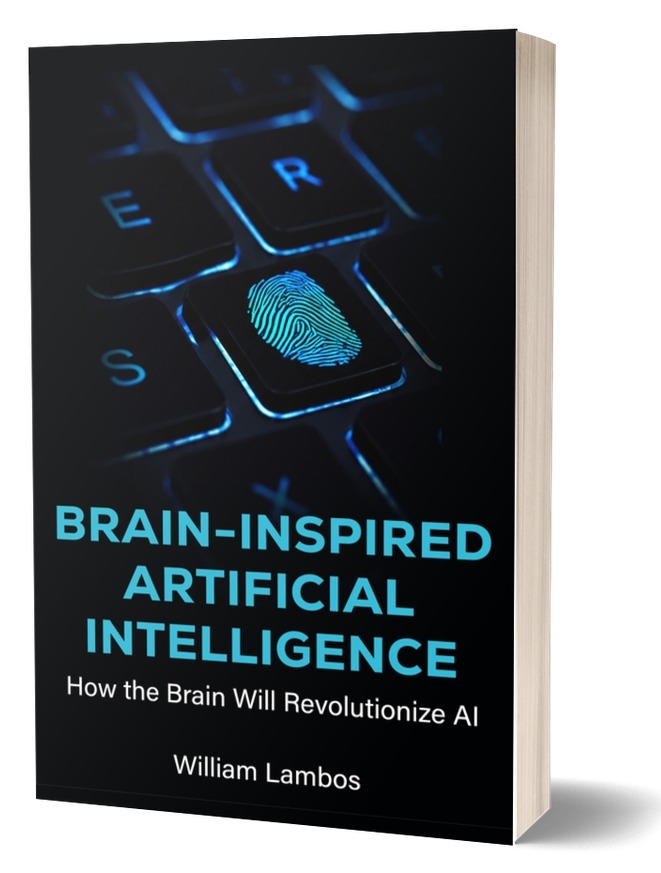
ISBN 979-8-9964285-1-9
Coming Soon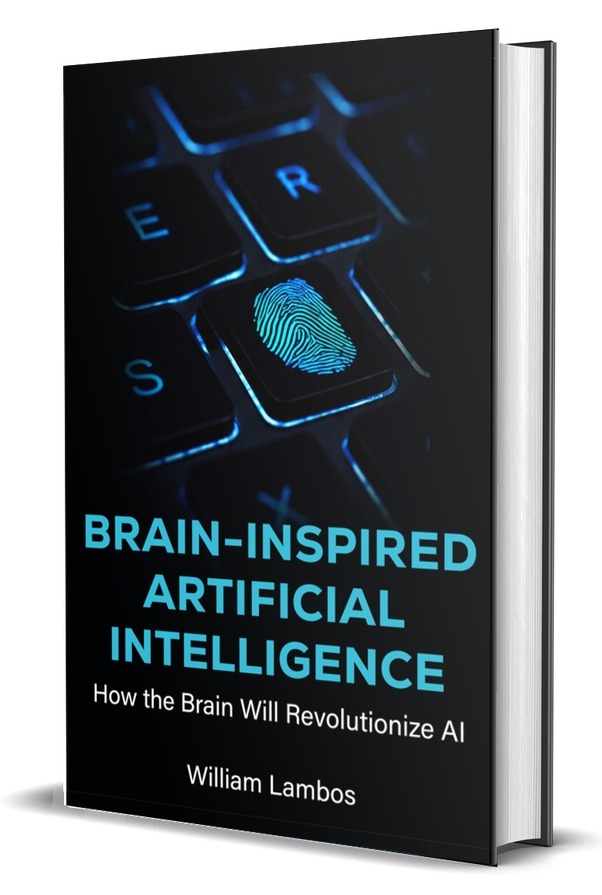
ISBN 979-8-9964285-2-6
Coming SoonEbook purchases go to Amazon Kindle. Paperback and hardcover buttons activate at publication.
Stay Informed
One short note when the paperback and hardcover are released, plus occasional writing on brain-inspired AI. No noise, and you can leave any time.